Schedule a free consultation!
631-946-2600


Freezing temperatures can turn a reliable garage door into a daily frustration, delaying your commute or disrupting business deliveries. Preparing before winter gives you time to address worn seals, unusual noises, and opener problems before they get worse.
This guide covers four winter checks for Long Island homes and businesses: weather protection, moving components, opener performance, and commercial door readiness.
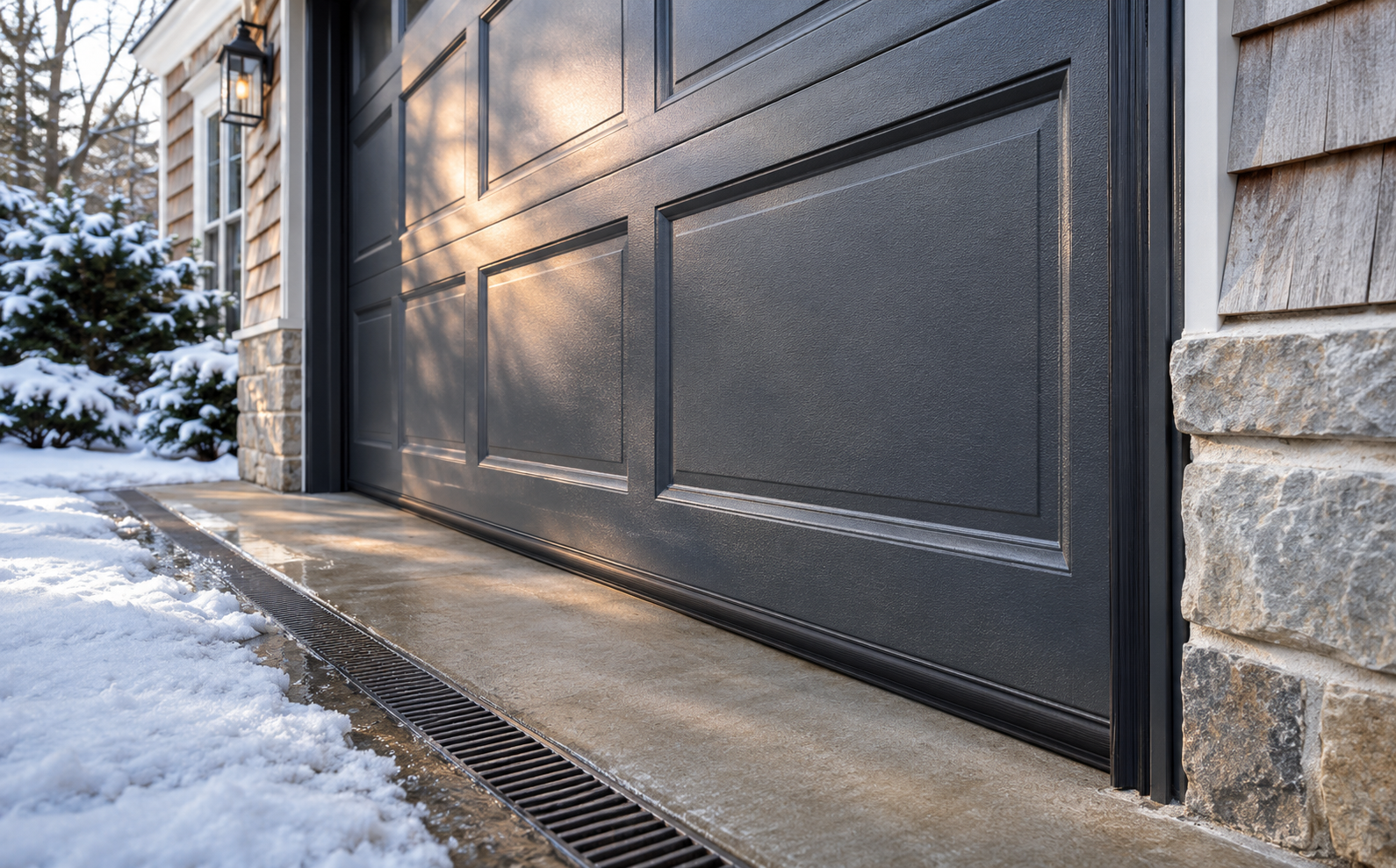
Your garage door is a large opening in your property’s exterior, so its condition matters when cold weather arrives. Before focusing on the opener, look at the door itself and the seals around it. Visible gaps, damaged panels, and deteriorated weatherstripping deserve attention. A winter inspection should consider how the entire opening fits together, including the door, frame, threshold, and surrounding drainage.
The flexible seal beneath your garage door should meet the floor when the door closes. Weatherstripping along the sides and top helps close the spaces between the moving door and its frame. Look for cracks, tears, flattened areas, or sections that have pulled away.
With the door fully closed, inspect the opening from inside during daylight. Visible light around the edges can help identify gaps, although uneven concrete or installation problems may also contribute. Replacing a seal without understanding the cause may leave the original issue unresolved.
Ask a technician to check the fit if you notice recurring drafts or water entering beneath the door. Manufacturer guidance identifies brittle seals, missing material, and gaps as reasons to investigate weatherstripping replacement.
If your garage feels uncomfortable throughout winter, consider the construction of the door as well as the condition of its seals. An older, uninsulated door may be worth comparing with an insulated replacement, particularly when the garage is attached to your home.
Insulation is only one part of the decision. The door’s fit, perimeter sealing, garage walls, and how often you open the door also affect conditions inside. An insulated garage door does not turn an unheated garage into a temperature-controlled room.
When comparing residential garage doors, explain how you use the space. A garage used primarily for parking may have different priorities from one that also contains a workshop or sits beneath a bedroom. A professional assessment can help put insulation options into context.
Take a careful look at the door’s exterior before winter preparation becomes an urgent repair. Note dents, separated sections, peeling finishes, or visible deterioration. Photograph anything concerning so you can show a technician whether the problem changes over time.
The material matters when discussing maintenance. A wood door, painted steel door, and aluminum door may require different cleaning products and care procedures. Follow the manufacturer’s instructions rather than applying the same treatment to every surface.
Also inspect the area immediately outside the opening. Does water collect near the threshold after rain? Does runoff travel toward the garage? Mention those conditions when booking an inspection. They provide useful context when a technician evaluates recurring moisture problems or a damaged bottom seal.

Winter preparation should include watching and listening to your garage door during a complete opening and closing cycle. Observe it from a safe position, keeping people, pets, and belongings away from its path. A door that jerks, scrapes, or moves unevenly needs attention. Recording a short video can help explain an intermittent problem when you arrange service, especially if the symptoms disappear before the technician arrives.
You probably know what your garage door normally sounds like. A new grinding noise, repeated banging, or a noticeable change in speed is useful information, even if the door still completes its cycle.
Pay attention to when the problem occurs. Does the noise happen near the floor, halfway through travel, or just before the door reaches its fully open position? Does one side appear to move differently from the other? These observations can help a technician investigate the cause.
Avoid assuming that every unusual sound needs more lubricant. Noise may accompany wear, alignment problems, or damaged components. If operation has changed, arrange a garage door service call so the system can be inspected before you continue relying on it.
Garage door maintenance should follow the instructions for your specific door and hardware. Different components have different requirements, and applying a product everywhere can create problems rather than solve them.
Manufacturer guidance distinguishes between lubricating suitable moving parts and keeping other surfaces clean. For example, rollers may require lubrication at their bearings, while their running surfaces need different treatment. Product selection also matters, particularly when temperatures vary.
If you do not know what was previously applied or which components need attention, have a technician handle the maintenance. Explain any sticking or noise you have noticed and ask which routine tasks are appropriate between visits. This gives you a maintenance approach suited to your equipment instead of a general spray-and-hope routine.
Springs and cables play an essential role in supporting and controlling the door’s movement. They are also parts of the system that require professional handling. Do not adjust spring tension, loosen bottom brackets, or attempt to repair a frayed cable yourself.
Warning signs include a door that looks crooked, visible cable damage, or a sudden change in how the door moves. If you notice a spring that appears broken or a door that seems unstable, stop operating it and keep the area clear.
A winter service appointment is an opportunity to have the technician inspect these components and assess the door’s balance. The opener should not be expected to compensate for a mechanical problem. Manufacturer maintenance guidance specifically reserves repairs involving high-tension components for garage door professionals.
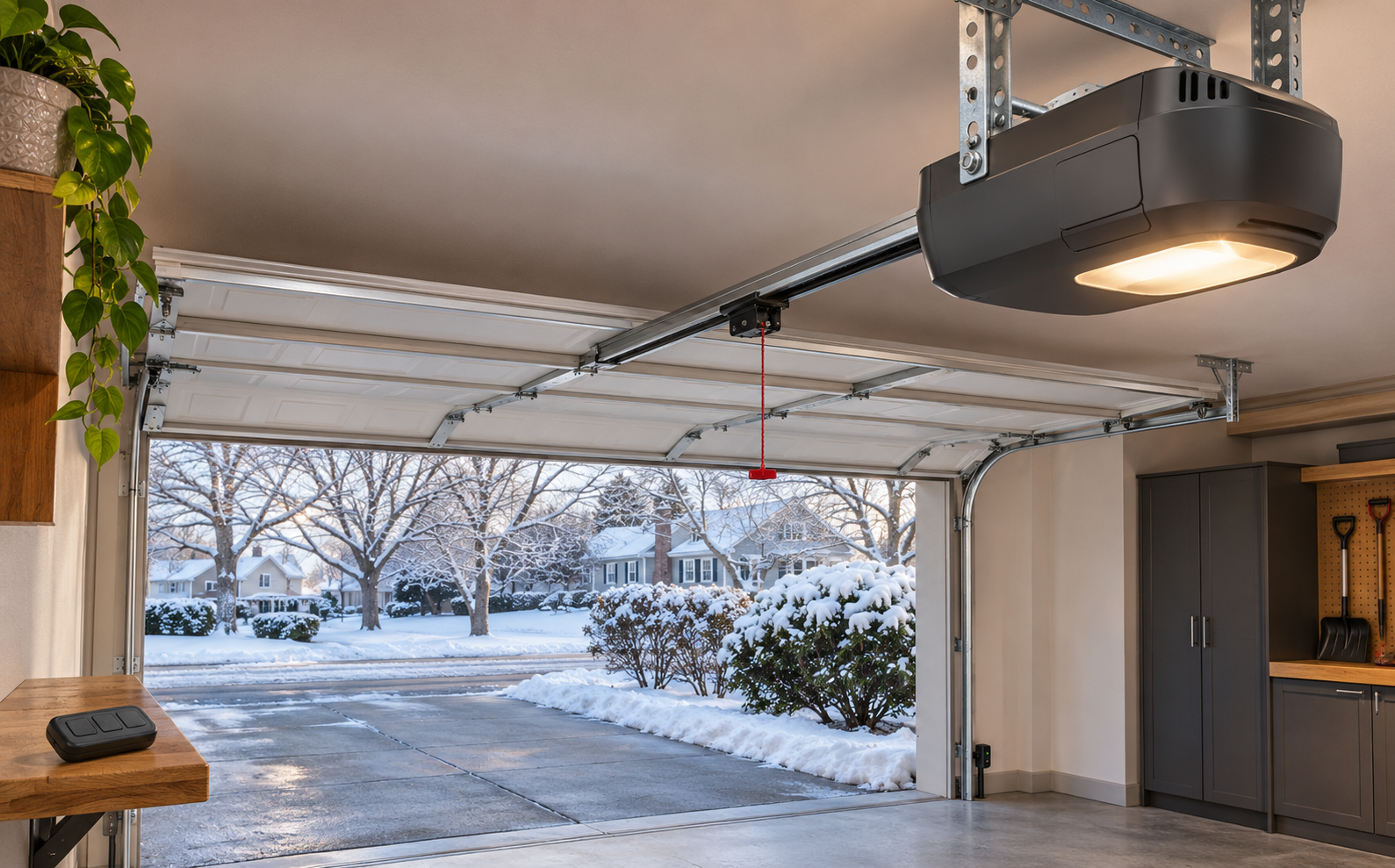
A dependable door also needs a dependable opener. Before winter, review how the system responds to the wall control, remote, and any connected features you regularly use. Gather the model information and locate the owner’s manual. This makes it easier to check maintenance instructions, understand warning indicators, and discuss repair or replacement options without guessing about the equipment installed in your garage.
An opener that works only after several attempts deserves attention. Make a note of whether the issue affects the handheld remote, wall control, or both. Check the remote’s battery according to its instructions, but avoid treating a battery replacement as proof that the entire system is healthy.
Describe the symptoms accurately when booking service. Does the motor run without moving the door? Does the door begin closing and then reverse? Are there flashing lights or an error message? Different symptoms require different investigations.
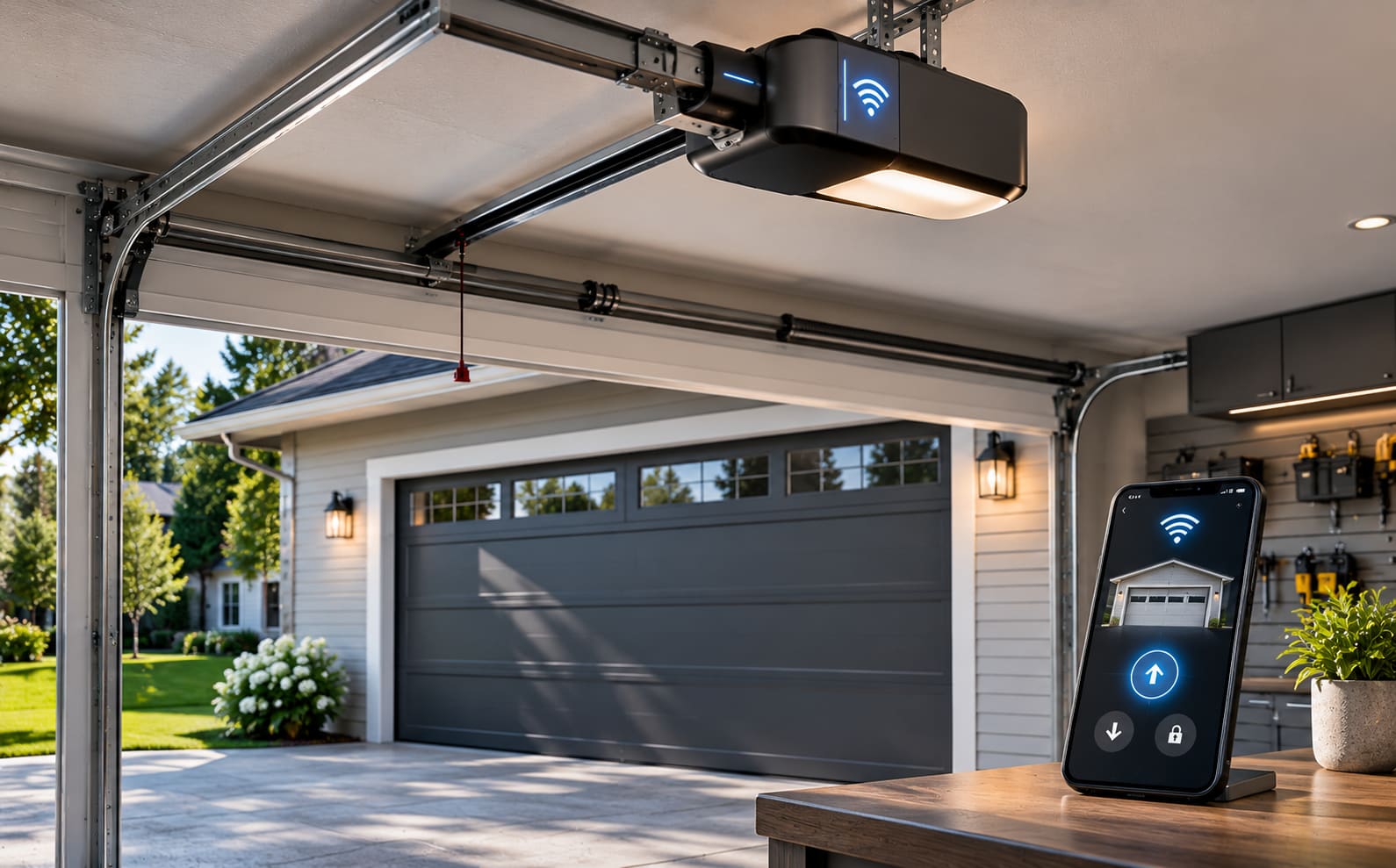
DJ Doors provides garage door opener services for several system types, including belt-drive, chain-drive, wall-mounted, and smart openers. An inspection can help establish whether the problem involves the opener, controls, or door hardware.
Make sure the area around the door remains clear as you bring winter equipment into the garage. Shovels, storage containers, and seasonal decorations should have designated places outside the door’s travel path and away from its safety equipment.
Follow your opener’s manual for checking its safety features. If a required test fails, stop using the automatic system and arrange professional service. Never bypass a safety sensor or increase the opener’s force setting simply to make a reluctant door close.
This is also a good time to review household habits. Everyone using the garage should wait until the door finishes moving before passing through the opening. Keep remotes away from children and make sure visitors understand that the garage door is moving equipment.
Consider how you would access the garage if electrical power were unavailable. Review the manual-release instructions before an outage and ask a technician to explain them if anything is unclear. Do not disconnect an open door or a door with suspected spring or balance problems.
Some openers include battery backup, which allows operation during a power outage. Availability and installation options depend on the model, so confirm compatibility before purchasing an accessory or planning an upgrade.
Battery backup also needs maintenance. Check your model’s instructions for battery warnings, testing, and replacement. LiftMaster notes that battery life depends on usage and care, so an installed backup should not be assumed to remain ready indefinitely. Include it in your winter inspection discussion.
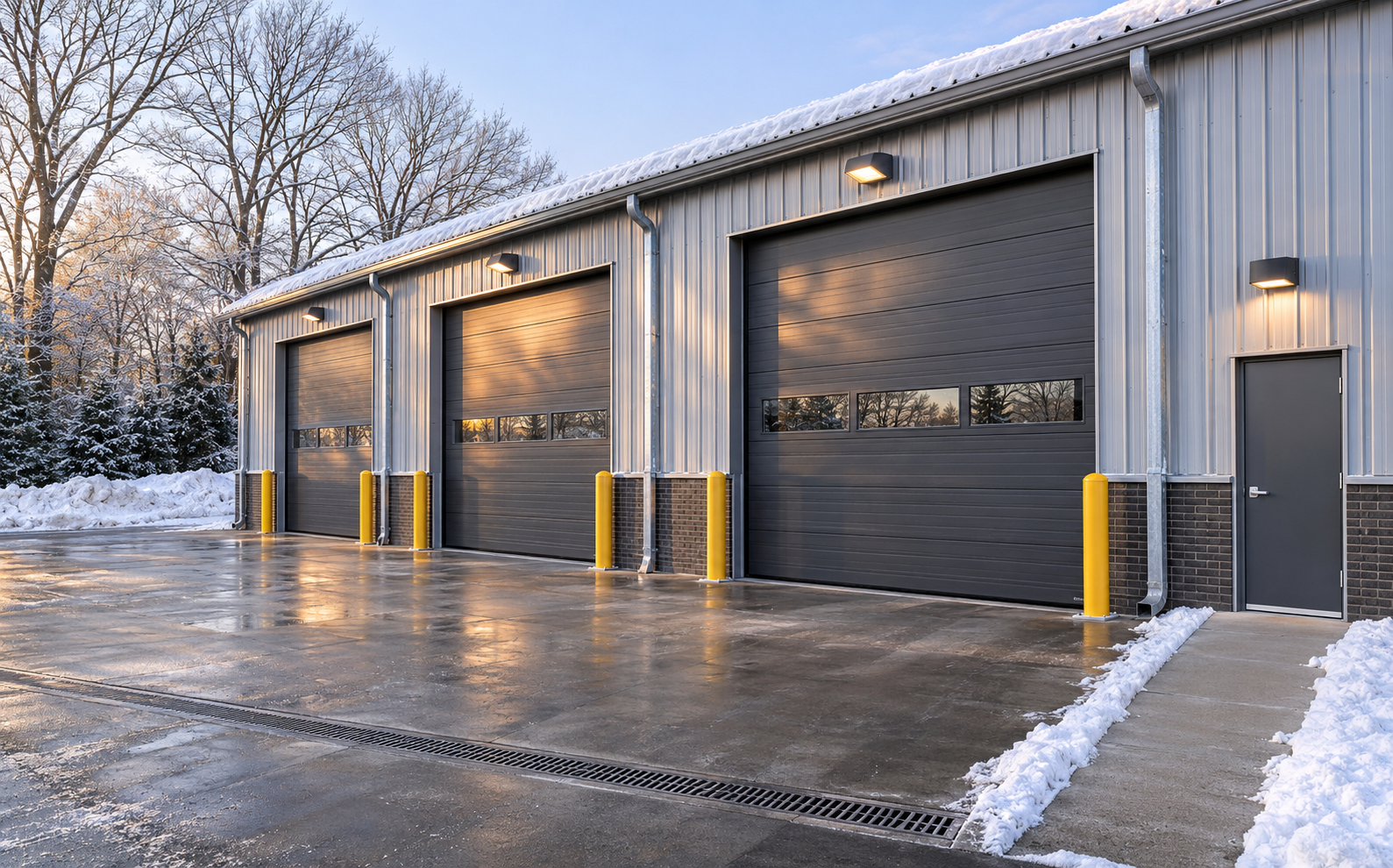
Commercial properties need a winter plan that accounts for daily operations as well as equipment condition. A loading door may open repeatedly throughout the day, while a storage building’s door may remain closed for long periods. Consider how each opening supports the business, who operates it, and what happens if it becomes unavailable. This helps you prioritize inspections and arrange service around your actual operating needs.
List the doors at your property and identify which ones are essential for deliveries, vehicle access, or equipment movement. Share their approximate usage and any recurring problems with your service provider. A door that cycles frequently may need a different maintenance schedule from one used occasionally.
Keep a simple record of repairs and service visits. Repeated faults are easier to evaluate when the technician can see what happened previously and which components were replaced.
DJ Doors offers commercial garage door services for business properties on Long Island. Discuss the door type, operating demands, and scheduling requirements when arranging an inspection so the visit addresses the needs of your facility. www.djdoorsinc.com
Assign responsibility for keeping the approach to each commercial door clear. Snow removal should leave space for safe vehicle and pedestrian movement without creating a pile directly against the door. Make sure employees know where cleared snow should go.
Inspect accessible surfaces for dirt and salt buildup, particularly after vehicles bring winter road residue onto the property. Use cleaning methods approved for the door’s material and finish, and choose suitable weather conditions so cleaning does not create an icy walking surface.
Commercial door manufacturer guidance identifies road salt as a concern because buildup can contribute to corrosion. Routine cleaning and inspection therefore deserve a place in the property’s winter maintenance schedule alongside snow removal and access planning.
A clear response plan helps employees avoid turning a door problem into equipment damage. If the bottom seal appears frozen to the ground, stop pressing the opener button. Do not force the door upward or ask several people to pull on it.
Keep the opening clear and contact a qualified service provider when the cause is uncertain. Manufacturer guidance warns against forcing a frozen door because doing so can cause damage. Avoid improvised heating or ice-removal methods that could harm the seal, finish, or nearby surfaces.
Record who employees should contact, which alternate access route they can use, and who can authorize repairs. Homeowners can use the same approach on a smaller scale by keeping the service provider’s details available and identifying another way into the house.
Preparing your garage door for a Long Island winter starts with understanding its current condition. Look for damaged weatherstripping, changes in movement, unreliable opener responses, and visible wear. Review power-outage access and make sure the opening remains clear as winter supplies move into the garage.
An inspection can help distinguish routine maintenance from repairs that need prompt attention. It can also give you a clearer basis for comparing replacement options if your existing door no longer meets your needs.
Whether you manage a commercial building or use your garage as your home’s everyday entrance, addressing known problems before freezing weather arrives gives you more time to arrange the right solution.
Has your garage door become louder, started moving unevenly, or left noticeable gaps around the opening? Give DJ Doors the details and arrange an inspection before those concerns disrupt your winter routine.
DJ Doors serves Long Island homeowners and businesses with garage door service calls, opener work, and residential and commercial door solutions. The team can assess your existing system and discuss the repairs or upgrades appropriate for your property.
Contact DJ Doors to schedule your winter garage door inspection and get professional guidance on your next step.
At DJ Doors Inc., we offer a comprehensive range of garage door services designed to meet both residential and commercial needs. Whether you're looking to install a new garage door, repair an existing one, or upgrade your garage door opener, our expert team is here to provide reliable and efficient solutions.